Hearing scratching above your ceiling after dark? Roof rats are one possible cause, especially if you’re also finding droppings in the garage or chewed fruit in the yard.
We’ve been doing more rodent work in North County lately. From October 20 through November 16, our Vista team completed 46 rodent service appointments, compared with 13 during the same four weeks last year. Here’s what to look for around your home and what you can do about it.
What is a roof rat?
Roof rats are slim, dark rats with a tail longer than their head and body. They’re strong climbers. Norway rats tend to burrow, but roof rats like to live up high in attics, rafters, tall hedges and palm trees.
UC IPM, the University of California’s pest management program, notes that roof rats prefer warm, coastal areas like ours. House mice can be part of the picture too. They often move indoors in autumn as nights get colder.
Why would rats get into my attic?
An attic gives rodents shelter, while nearby fruit trees and dense landscaping can provide food and cover. Citrus, avocados and thick vines like ivy, star jasmine and honeysuckle are common in North County yards, and roof rats take advantage of all of them. Keeping them out means looking at both the house and the yard.
What are the signs of roof rats?
- Scratching or scurrying sounds in the attic or walls, mostly at night.
- Droppings about half an inch long with pointed ends, often in the attic, garage or under sinks.
- Oranges or avocados hollowed out while still on the tree.
- Greasy rub marks along beams, pipes or the tops of fences.
- Chewed wiring, insulation or stored boxes.
- Pet food bags with a hole chewed through the corner.
Why bait alone won’t solve an indoor rat problem
California now prohibits the common anticoagulant rat baits for residential use, with limited exemptions for things like agriculture and public health. California’s Department of Pesticide Regulation explains the details.
Even where bait is an option, it doesn’t close the opening rats are using to get inside. A rodent that dies inside a wall can also leave an odor and be hard to reach. Lasting control means sealing the gaps rodents use to get in, removing food sources, and dealing with the rodents already inside.
What can I do this week?
Start with a slow walk around the house, then work from the roofline down. Most of these steps take an afternoon and don’t cost much.
- Trim branches and vines so they don’t touch or hang over the roof. Roof rats use them like a bridge.
- Pick up fallen fruit often, and harvest ripe citrus and avocados promptly.
- Thin out dense ivy and jasmine along fences and walls.
- Store pet food and birdseed in sealed containers, and bring pet bowls in at night.
- Look for gaps at roof vents, garage door seals and where pipes and wires enter the house. UC IPM notes rats can squeeze under a door with only a half-inch gap.
- If you set snap traps, place them along walls where you see droppings, and keep them out of reach of children and pets.
When should I call a pro?
Trimming, cleanup and sealing small gaps are good places to start. It’s worth getting help if you keep hearing activity after you’ve made those changes, if you find chewed wiring, or if you can’t find where they’re getting in. If you’re not sure what you’re hearing, an inspection can tell you whether it’s rats, mice or another animal entirely.
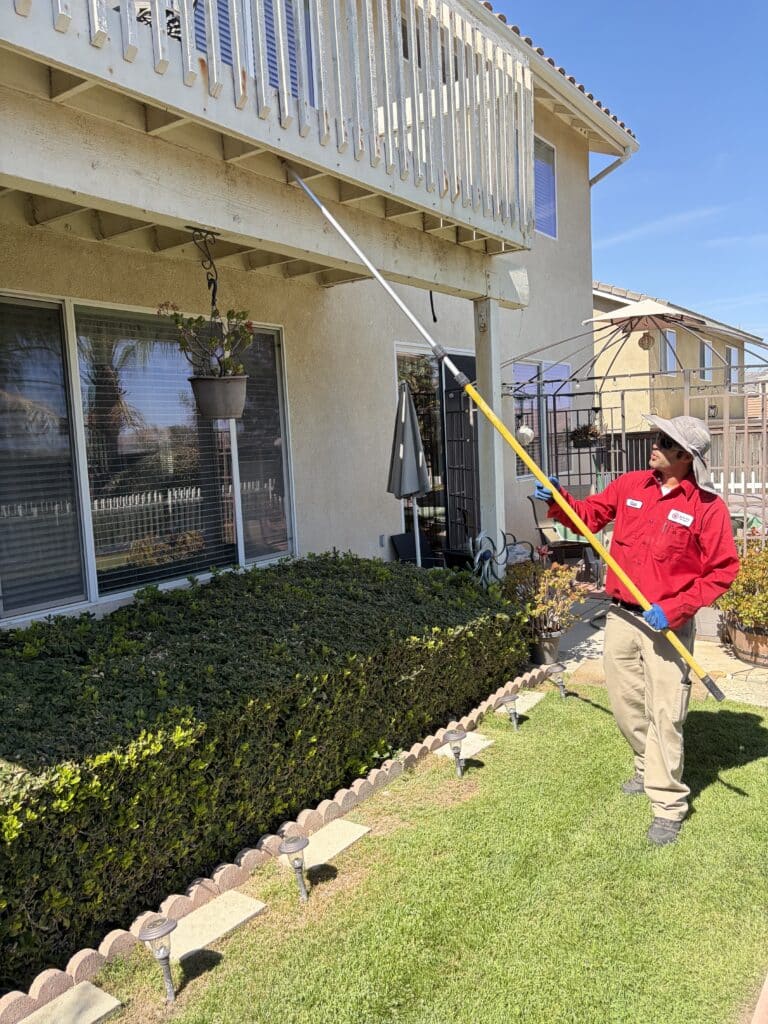
Our rodent control service starts with an inspection from the roofline to the foundation. From there we seal entry points, set up trapping, and follow up to make sure the activity has stopped.
Roof rat FAQ
Will roof rats leave on their own?
Rarely. If they have food, water and a sheltered attic, they tend to stay and breed. Closing off their way in is what keeps them out.
Do I have to remove my fruit trees?
No. Keeping branches trimmed away from the roof and picking fruit as it ripens goes a long way. The goal is to make the yard less inviting and the house harder to get into, not to strip the yard bare.
Is it a rat or a mouse?
Mouse droppings are small, about the size of a grain of rice. Roof rat droppings are closer to half an inch. Mice tend to show up in kitchens and wall voids, while roof rats often start in the attic.
Something running laps above your ceiling?
If you’re in Vista, Oceanside, Carlsbad, San Marcos or Escondido, give our Vista office a call at (760) 502-0236. We’ll explain what we find and recommend the next steps.